
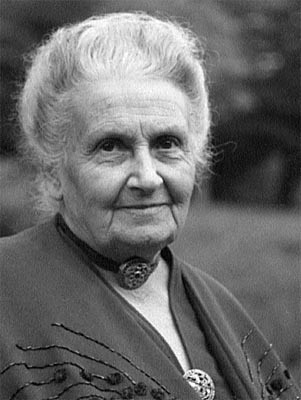
Maria Montessori was an Italian physician, educator, and innovator, best known for developing the Montessori Method of education. Born on August 31, 1870, in Chiaravalle, Italy, Montessori was a trailblazer in many respects. She was among the first women in Italy to obtain a medical degree, which she earned from the University of Rome in 1896. Her early work as a physician brought her into close contact with children who had special needs, which sparked her interest in child development and education.
Montessori’s approach to education was revolutionary for its time. She believed that children learn best in an environment that supports their natural curiosity and allows them to explore and discover at their own pace. Her educational philosophy was built around the idea that children are inherently capable of self-directed learning and that the role of the educator is to provide a prepared environment where this learning can take place.
In 1907, Montessori opened her first school, the Casa dei Bambini, or “Children’s House,” in a poor neighborhood in Rome. Here, she implemented her educational principles, which included a focus on hands-on learning, mixed-age classrooms, and respect for the child’s individual learning pace. The success of this school quickly drew attention, and Montessori’s methods began to spread internationally.
The Montessori Method emphasizes the importance of physical activity in the learning process, the development of social skills, and the nurturing of a child’s independence. Montessori classrooms are typically filled with specially designed learning materials that encourage children to engage in tasks that interest them, fostering both concentration and a love of learning.
Montessori’s work was not limited to education alone. She was also a strong advocate for women’s rights and worked tirelessly to promote peace, seeing education as a means to achieve a more just and harmonious society. Her legacy lives on today, with Montessori schools and educational programs in operation around the world.
Maria Montessori passed away on May 6, 1952, but her influence remains profound. Her ideas about education continue to shape how we think about teaching and learning, making her one of the most important figures in the history of education. The Montessori Method has proven to be a timeless approach that respects the individuality of each child, fosters independence, and instills a lifelong love of learning.
Conclusion
Maria Montessori was not just an educator; she was a visionary who changed the way we understand child development and education she is the founder of early childhood and care education. Her legacy is evident in the thousands of Montessori schools around the globe, each one continuing her mission to nurture the potential within every child. Montessori’s life and work remind us of the power of education to transform individuals and society, making her a true pioneer in her field.